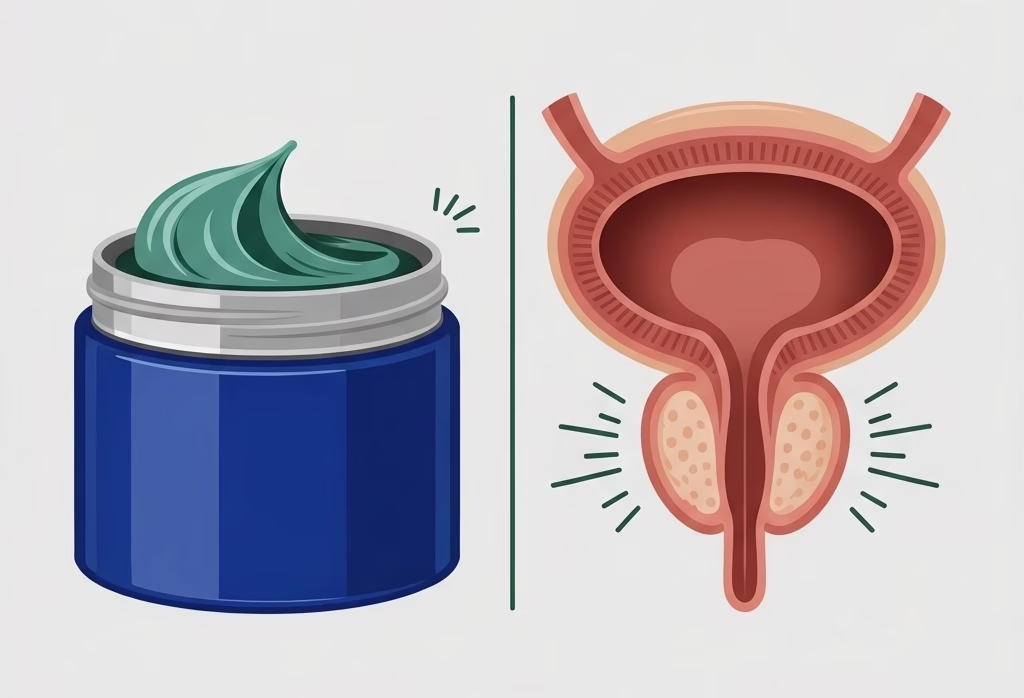
Is ginger good for prostate enlargement is a question that continues to gain attention as more men explore natural ways to support urinary comfort and long-term health.
Ginger has been used for centuries in traditional diets and herbal practices, often associated with digestion, circulation, and anti-inflammatory support. Because prostate health is influenced by similar systems, it’s no surprise that ginger is frequently mentioned in this context.
👉 But can it actually make a difference — or is the answer more nuanced?
Let’s explore what ginger may (and may not) do when it comes to prostate health.
Updated in August 2026 to reflect the latest research and natural approaches for prostate health.
✅ Is Ginger Good for Prostate Enlargement? (Quick Answer)
When it comes to is ginger good for prostate enlargement, ginger may offer supportive benefits — but it is not a direct solution.
Ginger contains bioactive compounds that have been studied for their potential role in:
- reducing inflammation
- supporting circulation
- contributing to antioxidant activity
These factors are relevant to overall prostate health. However, there is no strong evidence that ginger alone can shrink an enlarged prostate.
Its value is better understood as part of a broader lifestyle approach.
Why Ginger Is Linked to Prostate Health
Ginger root contains several active compounds, including gingerols and shogaols, which are often associated with anti-inflammatory and antioxidant effects.
Because prostate enlargement (BPH) is linked to:
- aging
- inflammation
- hormonal changes
ingredients that support these systems naturally become part of the conversation.
This is similar to other foods explored in prostate health discussions, such as in Are Tomatoes Good for Prostate Health? What Men Should Know, where nutrients like lycopene are studied for their role in long-term wellness.
Ginger and BPH: What Does the Research Actually Show?
Benign prostatic hyperplasia (BPH) is a common age-related condition in which the prostate becomes enlarged and may contribute to urinary symptoms such as a weaker stream, increased frequency, or difficulty emptying the bladder.
Ginger is interesting in this context because some of its compounds have demonstrated anti-inflammatory and antioxidant activity in laboratory and experimental research.
However, there is an important distinction between finding that a plant compound affects biological pathways and proving that it improves BPH in men.
At this point, research does not provide strong clinical evidence that eating ginger or drinking ginger tea reduces prostate size or treats BPH. Much of the interest surrounding ginger comes from its biological properties and early research rather than from large clinical trials specifically evaluating ginger as a treatment for enlarged prostate.
That doesn’t make ginger irrelevant. It simply means its potential role is better viewed as dietary or general wellness support, rather than as a proven therapy for BPH.
Men experiencing persistent urinary symptoms should also consider that similar symptoms can have different causes. A healthcare professional can help determine whether BPH or another prostate or urinary condition is responsible.
Can Ginger Shrink Prostate Enlargement?
This is one of the most searched — and misunderstood — questions.
Some online claims suggest that ginger can directly reduce prostate size. However, current evidence does not support the idea that ginger alone can shrink the prostate.
Instead, ginger may contribute indirectly by:
- supporting the body’s inflammatory balance
- aiding circulation
- promoting overall metabolic health
These effects can be helpful in a general sense, but they do not translate into immediate or measurable reductions in prostate size.
Ginger Tea for Prostate: Does It Make a Difference?
Ginger tea is one of the most common ways people consume ginger for health purposes.
It is often used because:
- it is easy to prepare
- it can be consumed daily
- it fits naturally into a routine
Some believe that warm ginger tea may support relaxation and hydration, which can indirectly influence urinary comfort.
However, there is no clear evidence that drinking ginger tea specifically targets prostate enlargement.
Like most natural approaches, its benefits are gradual and supportive rather than immediate.
How to Use Ginger for Prostate Health
Ginger can be included in a regular diet in several simple ways, and there is no single preparation that has been proven to work specifically for an enlarged prostate.
Fresh ginger root can be grated or thinly sliced and added to meals, soups, stir-fries, or homemade drinks. This is one of the simplest ways to include ginger as a food rather than relying on concentrated products.
Ginger tea is another popular option. Fresh ginger slices can be steeped in hot water to make a simple tea that can be enjoyed as part of a daily wellness routine.
Ground ginger can also be added to foods, smoothies, oatmeal, or beverages. It provides a convenient way to incorporate ginger without having to prepare fresh root.
Some men also use ginger extracts or supplements, which provide more concentrated amounts of ginger compounds. However, concentrated products should not automatically be considered more effective for prostate health. The evidence supporting ginger specifically for BPH remains limited, and supplements may also have a greater potential for interactions or side effects.
For most people, using ginger as a regular food or beverage ingredient is a practical way to enjoy its nutritional properties without treating it as a prostate treatment.
Is Ginger Bad for Enlarged Prostate?
Another common concern is whether ginger could have negative effects.
In general:
- ginger is considered safe in normal dietary amounts
- most people tolerate it well
- side effects are usually mild when they occur
However, excessive intake or concentrated supplements may cause:
- digestive discomfort
- interactions with certain medications
As with any natural ingredient, moderation and balance are key.
Ginger and PSA Levels
PSA (prostate-specific antigen) levels are an important marker in prostate health monitoring.
Some discussions suggest that ginger’s antioxidant properties may support overall health, which could indirectly relate to PSA balance.
However:
- ginger is not a treatment for PSA changes
- PSA levels depend on multiple factors
- proper medical evaluation is essential
Ginger can be part of a healthy routine, but it should not be relied on to control PSA levels.
What Ginger Research Actually Tells Us About the Prostate
Interest in ginger and prostate health comes partly from research examining gingerols, shogaols, and other compounds found in ginger.
Laboratory studies have investigated these compounds for their effects on processes related to inflammation, oxidative stress, and cellular activity. Some experimental research involving prostate cells has also contributed to interest in ginger and its potential role in prostate-related research.
But laboratory findings are not the same as clinical evidence.
A compound showing an interesting effect in cells or experimental models does not necessarily mean that eating ginger produces the same effect in the human prostate. Researchers still need well-designed human studies to determine whether ginger can meaningfully affect prostate enlargement, urinary symptoms, PSA levels, or other clinical outcomes.
For that reason, the most reasonable conclusion at this stage is that ginger is scientifically interesting, but its specific benefits for prostate health in humans remain uncertain.
This distinction is especially important when evaluating claims about whole ginger extract or concentrated supplements. A promising mechanism can justify further research without proving that a product can prevent, reverse, or treat a prostate condition.
Ginger with Garlic or Turmeric: Do Combinations Help?
Many natural health discussions focus on combining ingredients to enhance potential benefits.
Common combinations include:
- ginger and garlic
- ginger and turmeric
These combinations are popular because each ingredient is associated with anti-inflammatory and antioxidant properties.
For example:
- garlic is often included in dietary approaches, as explored in How to Eat Garlic for Prostate Health: What Actually Makes a Difference
- turmeric is frequently discussed for its active compound curcumin, as explained in Can Turmeric Shrink Prostate? What Research and Natural Practices Suggest
While these combinations may support overall wellness, they should still be viewed as part of a broader lifestyle rather than a targeted solution.
Benefits of Whole Ginger Extract in Prostate Health Discussions
Some research has explored the effects of ginger extracts on cellular processes.
These studies often focus on:
- antioxidant activity
- inflammatory pathways
- cellular responses
Because of this, ginger sometimes appears in discussions about long-term health and disease prevention.
However, it’s important to distinguish between:
- laboratory or early-stage research
- real-world outcomes in daily health
This helps maintain realistic expectations about what ginger can actually do.
What Matters Most When Using Ginger for Prostate Health
Ginger can be a useful addition to a balanced diet, but it is unlikely to make a meaningful difference on its own.
For men interested in prostate wellness, the bigger picture includes several everyday factors. A balanced diet, regular physical activity, healthy body weight, adequate sleep, stress management, and sensible hydration habits can all contribute to overall health as men age.
Ginger can therefore be viewed as one small piece of a larger routine, rather than a single ingredient expected to change prostate size or urinary symptoms.
For example, dietary choices can provide a variety of plant compounds and nutrients rather than relying on one food. Regular movement and exercise can also support cardiovascular and metabolic health, which are relevant to overall prostate wellness.
The goal is not to find one ingredient that does everything. It is to build habits that are sustainable enough to support health over time.
🔹 Final Thoughts: Is Ginger Good for Prostate Health? The Bottom Line
Looking again at is ginger good for prostate enlargement, the long-term perspective provides the clearest answer.
Ginger can be a valuable addition to a healthy lifestyle due to its supportive properties. However, it is not a standalone solution or quick fix.
Its role is to contribute — alongside other foods and habits — to overall wellness.
For a broader view of foods that may support prostate health, you can explore Foods to Eat for Prostate Health: 10 Powerful Choices, where ginger fits into a larger nutritional picture.
❓ FAQ – Is Ginger Good for Prostate?
Is ginger tea good for prostate enlargement?
Ginger tea may support hydration and overall wellness, but it is not proven to directly reduce prostate size.
Can ginger shrink the prostate?
There is no strong evidence that ginger alone can shrink an enlarged prostate.
Is ginger safe to consume daily?
Yes, in normal dietary amounts, ginger is generally safe for most people.
Is ginger and turmeric good for prostate health?
Both are associated with anti-inflammatory properties, but their effects are supportive rather than curative.
Can ginger help with BPH symptoms?
Ginger has properties that may support general inflammatory and antioxidant balance, but there is not enough clinical evidence to say that ginger reliably improves BPH symptoms. It should be considered a dietary wellness option rather than a proven treatment for an enlarged prostate.
You may also find this helpful:
👉 How To Shrink Prostate At Home? 8 Proven Ways to Relieve Symptoms
👉 Foods to Eat for Prostate Health: 10 Powerful Choices to Support a Healthy Prostate Naturally
👉 Lemon Peel for Prostate Health: Hidden Remedy or Internet Myth?
Disclaimer:
The information provided in this article is for educational purposes only and is not a substitute for professional medical advice, diagnosis, or treatment. While natural remedies and lifestyle changes may help relieve symptoms of an enlarged prostate, it’s important to consult with a healthcare provider—especially if symptoms persist or worsen. Early diagnosis and proper medical guidance are essential for long-term prostate health and overall well-being.