If you’ve recently received a PSA result and found yourself staring at a number like 6, 11, 20 — or even 56 — your mind probably went straight to the worst-case scenario. That reaction is completely normal. For decades, PSA testing has been tightly linked to prostate cancer screening, so seeing an elevated PSA often triggers immediate fear.
But here’s the truth most men aren’t told upfront: PSA is not a cancer test.
It’s a prostate activity marker — and many things besides cancer can cause PSA to rise, sometimes dramatically.
That’s why understanding what PSA levels actually mean, what’s considered high, and when a number is truly dangerous can make the difference between panic and informed, confident action.
Let’s break it down — calmly, clearly, and without medical jargon.
What is a dangerous PSA level? Quick Answer
A PSA level is generally considered concerning above 4 ng/mL, high above 10, and potentially serious above 20 — but no PSA number alone confirms cancer. What matters most is how fast PSA is rising, imaging results, symptoms, and medical context. Many men with high PSA do not have cancer, while some men with low PSA do. PSA is a signal, not a diagnosis.
What Is PSA, Exactly?
PSA stands for Prostate-Specific Antigen, a protein produced by prostate cells. Small amounts naturally leak into the bloodstream, which is why PSA can be measured with a simple blood test.
A PSA test does not diagnose cancer. It only signals that something is happening in the prostate — and that something could be:
- Benign prostate enlargement (BPH)
- Prostatitis (inflammation or infection)
- Recent ejaculation
- Urinary retention
- Cycling or prostate stimulation
- Medical procedures
- Or, in some cases, cancer
In other words, high PSA ≠ cancer — but it does mean the prostate deserves attention.
What Is Considered a Normal PSA Level?
Traditionally, doctors used this rough guide:
- PSA under 4.0 ng/mL → considered normal
- PSA 4.0–10.0 → borderline or mildly elevated
- PSA over 10.0 → higher risk zone
But modern medicine now looks beyond a single cutoff number. Age, prostate size, PSA velocity, and trend over time matter far more than one isolated result.
Which brings us to the big question…
What Is a Dangerous PSA Level?
There is no single PSA number that automatically means cancer — but certain ranges increase concern.
In general:
- PSA under 4 → usually low concern
- PSA 4–10 → mild to moderate elevation
- PSA 10–20 → higher concern, needs investigation
- PSA over 20 → significantly elevated
- PSA over 50–100+ → often associated with advanced prostate conditions, but still not automatically cancer
So when people ask, “What PSA level is dangerous?” — the honest answer is:
A PSA level becomes dangerous not because of the number alone, but because of what it represents when combined with symptoms, trends, and imaging.
And yes — even very high PSA levels don’t always mean cancer.
My PSA Is 56 — Should I Worry?
This is one of the most searched questions online, and understandably so.
A PSA of 56 is very high, and it absolutely warrants prompt medical evaluation. But here’s what many men don’t realize:
- Severe prostatitis alone can push PSA above 50
- Acute infections can cause dramatic spikes
- Some men with PSA over 100 have no cancer at all
- Others with PSA under 4 do
So while a PSA of 56 is serious, it is not a diagnosis — it’s a signal.
Today, doctors often use:
- MRI imaging
- PSA density
- PSA velocity
- Repeat testing
…before jumping to biopsy.
In many cases, inflammation treatment alone causes PSA to fall dramatically within weeks.
👉 Important:
Many men are surprised to learn that natural approaches targeting prostate inflammation, urinary flow, and cellular stress can sometimes help stabilize PSA trends — especially when levels are rising but imaging is unclear. Prioritizing especific foods, drinks, exercises, and doing some simple lifestyle changes can make the difference o support prostate health and PSA balance.
Along with these natural approaches, you can explore specific natural prostate support formulas designed to support hormone balance and bladder function as part of a broader lifestyle approach. Take a look at The 3 Best Supplements for Prostate After 50.
(Keep reading — the science below explains exactly why this works.)
What Is a Dangerous PSA Level by Age?
PSA naturally increases with age because the prostate grows over time. That’s why many doctors now use age-adjusted PSA ranges:
| Age | Typical Upper PSA Range |
|---|---|
| 40–49 | 2.5 |
| 50–59 | 3.5 |
| 60–69 | 4.5 |
| 70–79 | 6.5 |
So a PSA of 6 in a 45-year-old is more concerning than a PSA of 6 in a 75-year-old.
This is why context matters more than cutoffs.
What Is a Dangerous PSA Velocity? (How Fast PSA Rises Matters)
Sometimes the number itself isn’t as important as how fast it changes.
Doctors look at PSA velocity, which is how much PSA increases over time:
- PSA increase >0.75 ng/mL per year → concerning
- PSA doubling in under 12 months → higher risk
- PSA jump within 6 months → often linked to inflammation or infection
For example:
- PSA from 3 → 6 in one year = more concerning than stable PSA at 7 for several years
This is why trend matters more than a single reading.
What Does a PSA of 6 Mean?
A PSA of 6 sits in the mild-to-moderate elevation range.
Common causes include:
- Benign prostate enlargement
- Low-grade inflammation
- Recent sexual activity
- Urinary tract irritation
Statistically:
- Cancer risk exists but remains relatively low
- Many men with PSA of 6 never develop prostate cancer
Doctors usually repeat the test, assess velocity, and possibly order imaging before further action.
What Does a PSA of 8 Mean?
A PSA of 8 represents moderate elevation.
This increases the likelihood of:
- BPH
- Chronic inflammation
- Infection
Cancer risk rises somewhat but is still far from guaranteed. Many men at this level are managed with monitoring and imaging, not immediate biopsy.
What Does a PSA of 11 Mean?
A PSA of 11 crosses into the higher-risk zone statistically — but again:
- Many men at this level still do not have cancer
- Inflammation and prostate volume can explain PSA levels above 10
Doctors usually recommend imaging and additional biomarkers before invasive testing.
What Does a PSA of 20 Mean?
A PSA of 20 is considered significantly elevated.
At this level:
- Cancer risk increases substantially
- But benign causes are still possible
- Imaging becomes very important
It’s not uncommon for PSA levels around 20 to fall after treatment for prostatitis or urinary obstruction.
What Does a PSA of 50, 100, or Even 200 Mean?
Extremely high PSA levels (50, 100, 200+) understandably cause fear — but they still do not guarantee cancer.
Examples from clinical practice:
- Severe bacterial prostatitis → PSA above 100
- Acute urinary retention → massive PSA spikes
- Prostate infarction → temporary extreme elevations
That said:
- PSA over 50 → warrants urgent evaluation
- PSA over 100 → strongly associated with advanced prostate disease, but not always cancer
- PSA over 200 → rare but documented without malignancy in acute inflammatory states
So yes — these numbers are serious — but they’re still signals, not diagnoses.
What PSA Level Indicates Prostate Cancer?
There is no PSA number that definitively means cancer.
However, statistically:
- PSA 4–10 → ~25% cancer risk
- PSA 10–20 → ~40–50% cancer risk
- PSA >20 → higher probability, especially if imaging is abnormal
But many men with PSA under 4 have cancer, and many with PSA over 20 do not.
This is why modern medicine increasingly relies on:
- Multiparametric MRI
- PSA density
- PSA velocity
- Biomarkers
- Family history
Rather than PSA alone.
What Is Considered a High PSA Level?
Generally:
- PSA above 4 → elevated
- PSA above 10 → high
- PSA above 20 → very high
- PSA above 100 → extremely high
But again — high PSA does not automatically mean dangerous.
Danger depends on:
- Rate of increase
- Imaging findings
- Symptoms
- Clinical context
What Can Raise PSA Levels (Besides Cancer)?
Many things can cause PSA to rise temporarily:
- Prostatitis or infection
- Benign prostate enlargement
- Urinary retention
- Ejaculation within 48 hours
- Cycling
- Prostate exams or procedures
- Catheterization
- Inflammation from metabolic stress
This is why doctors often repeat PSA tests after antibiotics or rest before making conclusions.
What Is the Highest PSA Level Ever Recorded?
Medical literature reports PSA levels in the thousands — including cases above 5,000 — both in cancer and severe infection.
So if you’re wondering, “How high can PSA levels go?” — the answer is: extremely high. But again, the number alone doesn’t tell the full story.
PSA Rising Fast — Should You Panic?
Not panic — but take action.
If your PSA:
- Doubled within a year
- Jumped significantly in 6 months
- Crossed major thresholds suddenly
It’s important to investigate — but remember:
Rapid PSA rises are often inflammatory, not malignant.
This is where repeat testing, imaging, and addressing prostate health holistically becomes crucial.
So… What Is a Dangerous PSA Level Really?
Here’s the honest, modern answer:
A PSA level becomes dangerous not because of its absolute value, but because of what it reflects when combined with:
- Rapid velocity
- Abnormal imaging
- Symptoms
- Clinical findings
PSA is best viewed as a signal, not a verdict.
And the good news?
Most elevated PSA cases are not cancer — and many respond well to early intervention, lifestyle changes, inflammation control, and targeted prostate support.
What Should You Do If Your PSA Is High?
If your PSA is elevated:
- Repeat the test (many false elevations normalize)
- Avoid ejaculation and cycling before testing
- Ask about MRI before biopsy
- Evaluate inflammation or infection
- Track PSA velocity over time
- Support prostate health proactively
Many men find that when they reduce inflammation, improve circulation, balance hormones, and support prostate tissue at the cellular level, PSA trends stabilize — sometimes dramatically.
👉 Final Thoughts – What is a dangerous PSA level? What the Numbers Really Mean — and When You Should Worry
If you’re Googling:
- “What is a dangerous PSA level?”
- “My PSA is 56 — should I worry?”
- “Is a PSA of 6 bad?”
- “What PSA level indicates cancer?”
You’re not alone — and you’re not wrong to seek clarity.
But PSA is not destiny.
It’s a conversation starter, not a conclusion.
And with modern diagnostics and smart, proactive prostate support, most men regain peace of mind — and control — far sooner than they expect.
❓ FAQ – What is a dangerous PSA level?
What PSA level is considered dangerous?
A PSA level above 10 ng/mL is considered high and deserves investigation, while levels above 20 are more concerning. However, no PSA number alone diagnoses cancer — trends, imaging, and symptoms matter more.
Is a PSA of 6 bad?
A PSA of 6 is mildly elevated. It often reflects benign prostate enlargement or inflammation and does not automatically indicate cancer, especially if stable over time.
What does a PSA of 11 mean?
A PSA of 11 falls into the higher-risk zone statistically, but many men at this level still do not have cancer. Doctors usually recommend imaging and repeat testing before biopsy.
My PSA is 56 — should I worry?
A PSA of 56 is very high and requires prompt medical evaluation, but it does not automatically mean cancer. Severe inflammation or infection can cause PSA to spike dramatically.
What is a dangerous PSA velocity?
A PSA rise greater than 0.75 ng/mL per year or PSA doubling in under 12 months is considered concerning and usually warrants further testing.
What PSA level indicates prostate cancer?
There is no PSA level that definitively indicates cancer. Higher PSA increases statistical risk, but diagnosis depends on imaging, biopsy, and clinical evaluation.
How high can PSA levels go?
PSA levels can reach the hundreds or even thousands in rare cases, due to severe inflammation, infection, or advanced prostate disease — but numbers alone never confirm cancer.
Can PSA levels go down naturally?
Yes. In many cases, addressing inflammation, prostate congestion, metabolic stress, and urinary flow can help stabilize or lower PSA levels — especially when cancer has been ruled out.
You may also find this helpful:
👉 The 15-Second Prostate Method Explained — And Why Men Are Giving It a Try
👉 Shrinking a Prostate Naturally – 6 Proven Ways That Actually Work (No Pills Required)
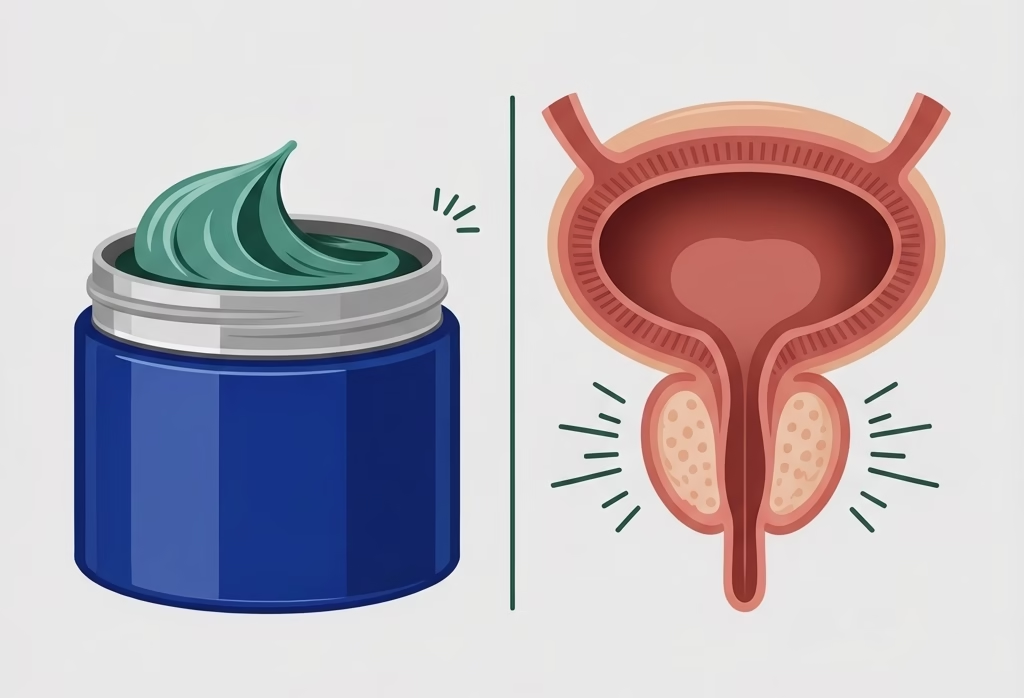
👉 Vicks VapoRub for Prostate: What You Should Know (And Why So Many Men Are Trying It)